Sunday, June 23, 2013

Noni Juice - The Fruit of Life?

Morinda citrifolia, or Noni, is a knobbly fruit widespread in tropical countries from Tahiti through Asia and back to Hawaii. In the Caribbean it is called ´dog dumpling´, but this sounds a lot less appetising! It can be eaten as the natural fruit but is more widely consumed in liquid form.

Noni contains a number of enzymes and alkaloids in quite large quantities. It would appear from several research studies to have four possible benefits:

Firstly, it directly stimulates the immune system increasing the production of both B - and T-lymphocytes. Furthermore, Noni contains pro-Xeronine, which can be converted to Xeronine by natural enzymatic action in the body´s tissues. Xeronine, produces a strong immune response to cancer cells in laboratory experiments.

Secondly, it appears to inhibit tumour development. Research conducted by Drs. Hirazumi and Furasawa at the Department of Pharmacology in the University of Hawaii, showed conclusively that the high polysaccharide content of Noni inhibits tumours in mice. Bromelain, an alkaloid and enzyme also found in pineapples and used in some dietary cancer therapies, is found in high levels in Noni and it is known to weaken the walls of cancer cells. The undoubted strength of Noni lies in this multi-polysaccharide, alkaloid and high phytochemical content. Dr DL. Davis, the senior science advisor to the US Public Health Service is very clear that, "phytochemicals can take tumours and diffuse them". Thirdly, Noni helps regulate cell function and cell regeneration. Dr Neil Solomon MD, PhD. conducted research with mice and showed that those fed Noni live live 123% longer than normal.

Noni is a knobbly fruit widespread in tropical countries

He believes this is due to Noni enhancing the body´s natural healing processes and balancing the body´s pH. Noni, in its concentrated form, provides a strong residue of alkaline ash in the body when consumed. This would serve most people well as their normal Western lifestyle and diet produces an acid body. A slightly alkaline pH is essential for the peak efficiency of the cellular biochemistry, and for the effective functioning of the immune system.

At CANCERactive, do we believe Noni is a cancer ´cure´? No. We believe it may have some polysaccharide benefits, may improve the immune system and so on. But, how much of the fruit´s natural ingredients remain once it has been pasteurised and put in a bottle we cannot tell.

If you are thinking of buying Noni juice you might like to look at the Natural Selection Product of Choice. You can do this by  clicking here.

Next, in a paper ´The Pharmacologically Active Ingredient of Noni´, R.M. Heinicke of the University of Hawaii concludes that Xeronine protects and keeps the shape of protein molecules, which after passage into the cell, can be better used to make healthy tissue. Xeronine may also help protein molecules pass into cells by enlarging the membrane pores and, so the theory runs, the bigger the pores, the larger the protein molecules ´feeding´ the cells and so the healthier they become. The juice must be drunk on an empty stomach as the pepsin and acid of the stomach will destroy Xeronine and pro-Xeronine. In fact, you should not eat anything for about two hours before and about half an hour after taking Noni.

Finally, Noni acts as an analgesic for headaches and as a healing agent for open wounds. Researchers in France have found that it is 75% as effective as morphine sulphate without the addictive side effects. In South East Asia, Noni is drunk to aid digestion and neutralise foreign bacteria in the stomach. And it is also used to put on cuts and wounds to speed up the healing process.

As an aside, there is a marketing war going on between Tahitian and Hawaiian
Noni products! For example, "Hawaiian Noni is 100% pure Noni while Tahitian is a juice, not 100% pure, and made from concentrate" (Hawaiian Noni web-site). To give the reader some feeling for the marketing fervour surrounding this product, there are almost 43,000 web sites for Noni!

One suspects the decision may have already been taken to ´disapprove´ Noni

There is one cloud on the horizon. The European Union, who only recently decided to halt the sale of vitamins and minerals beyond those on a prescribed, agreed list of just 20 or so (and even those in small doses), is also looking to cut a plethora of ´health products´, one of which is Noni. The EEC wants to categorise these products as speciality foods´ and these can only be sold if the producers give evidence on their benefits by submitting copious documentation. Even then, one suspects the decision may have already been taken to ´disapprove´ Noni.

Most Recommended Noni Products:


Life Time, Noni Mangosteen Goji & Acai Blend, 32 fl oz

Doctor's Best, Best Noni Concentrate, 650 mg, 150 Veggie Caps

Saturday, June 22, 2013

Lower cancer risk found in green tea drinkers

In case you haven't noticed, some of the most recent breakthroughs in terms of battling cancer have come from natural, not traditional medicinal, sources.

That trend is continuing, according to the results of a large new study which found that older women who regularly drink green tea may have less risk of developing colon, stomach and throat cancers, compared to women who don't consume tea at all.

Researchers discovered that of more than 69,000 Chinese women who they followed for more than 10 years, those who drank green tea at least three times per week were 14 percent less likely to develop a cancer afflicting the digestive system, Reuters reported, citing the scientists' work.

Generally speaking, that meant those women had less of a chance of developing esophageal, stomach and colon cancers.

'Strong evidence' that green tea works to some extent

Scientists involved in this study were unsure if the green tea itself was responsible for the lower rates of cancer, but noted that those who drink it are very often more health conscious. However, several previous studies have suggested green tea helps prevent certain kinds of cancer, through its powerful antioxidant action.

Nevertheless, this most recent study attempted to account for the health-conscious aspect, according to Dr. Wei Zheng, head of epidemiology at Vanderbilt University School of Medicine in Nashville, who led the study. None of those involved in the study smoked or drank alcohol on a regular basis. In addition, researchers gathered information on their diets, exercise habits, medical history and weight.

Even with all of those factors added to the equation, women's tea habits remained linked to their risk of developing cancer, noted Zheng, adding that nevertheless, this type of study can't prove cause-and-effect.

And he said that past studies revealed conflicting findings on whether consumers of green tea honestly have lower cancer risks (though the anecdotal evidence, at least, is very strong, as we have shown in our coverage of this topic).

"All of those studies," Reuters reported, "are hampered by the fact that it's hard to isolate the effect of a single food in a person's diet on the risk of cancer."

Clinical trials are just about the only types of studies that are able to reveal evidence of cause-and-effect, where people are randomly selected to drink green tea in some form - or not at all. According to the National Cancer Institute, there have been few such studies.

Zheng and his team, referencing his own study, said that "strong evidence" from lab research in animals and human cells suggested that green tea has some potential as an anti-cancer agent in a report on their findings in the American Journal of Clinical Nutrition.

Nearly 30 percent improvement in cancer rates

As in previous studies examining a link between green tea and a reduction in cancer risk, they revealed that the beverage contains key antioxidant chemicals - particularly a substance known as EGCG - that may act to thwart the body-cell damage which can ultimately lead to cancer and other disease processes.

For their study, Zheng and his team used data from an 11-year running study of 69,000 middle-aged and older Chinese women. More than 19,000 of them were considered regular consumers of green tea, in that they drank it at least three times a week.

Over the time period, 1,255 women developed some form of cancer of the digestive system. But the data show that generally speaking, risks for developing disease were somewhat lower when a woman drank green tea often and over a long time.

For instance, women who told researchers they'd had green tea regularly for at least 20 years were 27 percent less likely than non-green tea drinkers to develop a cancer of the digestive system. Also, they were 29 percent less likely to develop colorectal cancer.

Sources:

http://www.reuters.com

http://ajcn.nutrition.org/content/96/5/1056.abstract


Most Recommended Green Tea Products:

AriZona, Green Tea, with Pomegranate & Acai, 20 Tea Bags, 1.37 oz (38 g)

Now Foods, EGCg, Green Tea Extract, 400 mg, 180 Vcaps

Friday, June 21, 2013

Aloe Vera and cancer - A Mesopotamian Folk Remedy

Aloe Vera is a natural plant. The form you buy may be nearly 100 per cent natural. This natural compound was used in Egyptian times to fight skin problems and even skin cancer, and one of its major benefits is its ability to soothe. It contains at least 6 natural ingredients which act as ´anti-inflammatory agents´, reducing inflammation, one of the precursors to cancer.

So can Aloe vera can cancer?

Let´s be clear: At CANCERactive we think no single compound is a ´cure´ for cancer.

However, Dr Lawrence Plaskett, vice-chair of the Nutritional Council in the UK has stated that, "It is amazing in view of all the positive indications which exist for all the anti-cancer effects of Aloe Vera that no medical studies have been initiated in human cancer".

The US Department of Agriculture has however approved Aloe for the treatment of soft tissue cancers in animals (1992) as well as feline leukaemia; and Aloe is approved as an important component in European AIDS therapy where it has a powerful effect on the immune system and complements certain drug therapies.

Origins


Aloes first recorded use was in Mesopotamia in about 1500 BC. It was then favoured by both Egyptians and Greeks for the immediate treatment of burns, cuts, wounds, infections and even "parasites".

Aloe is a member of the lily family belonging to the group Xeroids, and grows in dry regions of Africa, Asia, Europe and America. There are 200 varieties of which four have nutritional value, the most common variety being Aloe Barbendis Miller.

It was favoured for the immediate treatment of burns, cuts, wounds, infections and even parasites

The usual debate is about the relative merits of the whole leaf or the gel. Some companies claim the inner leaf has the most benefits whilst others claim the outer leaf and rind are the crucial elements. Whatever the debate, Aloe is very well researched. In fact it has almost so many benefits it is easy to feel many of these are overclaims - but they are not!

People in the West started drinking Aloe gel in the late 70s as brands became available, with claims for nutritional, skin care and even weight loss benefits, It can also alkalise the body. However, recent years have seen biochemistry explain the various benefits of Aloe.

Active Compounds


What doesnt Aloe have? Over 200 active compounds have been recorded including vitamins, amino acids, minerals, enzymes, polysaccharides, fatty acids and more. For example:

Polysaccharides and Glycoproteins - We have covered this group of compounds previously in ICON. In 1994 Gilman and Rodbell won a Nobel Prize for showing how G-proteins help cells send messages inside them. By 1999 Blobel had won one for showing how messages pass round the body and in 2001 Hartwell, Hunt and Nurse won one for showing how cell messages operate in growth, division and mistakes. Such signals can clean membranes and receptor site like the diabetes receptor site whilst others pass across membranes. Of particular importance is the way bacteria and viruses, for example bond to locations on membranes. The latter is inhibited by glycoproteins and polysaccharides.

Aloe vera fights inflammation, and may thus fight cancer

If you are thinking of buying Aloe Vera, you might like to look at the Natural selection Product of Choice. You can do this by clicking here  

The most potent potysaccharide in Aloe is Acetylated Mannose or Acemannan, which is used in European AIDS treatment, Dr Akira Yagi and team at Fukuyama have isolated a number of these polysaccharide, phenolic and chromone compounds and these are at the core of Aloes anti-viral, anti-bacterial and immune boosting powers. Large polysaccharide molecules from Aloe have been shown to produce Tumour Necrosis Factor in the body, shutting off the blood supply to tumours. Others increase Interferon and macrophage production and T-cell quantity. But in cancer patients T-cells look for clear distinguishing areas on cells to sort the good from the bad and normally only one in a thousand T-cells can actively spot a rogue cell. Aloe polysaccharides also appear to dramatically improve this ratio.

So it is quality, not just quantity, that improves!

Anti-inflammatory benefits - There are a number of active compounds which reduce inflammation and can thus help in conditions from arthritis to wound repair, acne and insect bites. Fatty Acids, like gamma-linoleic acid, reduce inflammation, allergic reactions, blood platelet aggregation and improve wound healing. Salicylic acid is commonly found as aspirin and since 1982 Nobel Prize winner Sir John Vanes work on cellular environments we have known this can control excess prostaglandin production along with other negative factors. Gibberlin, sterols and the amino acids phenylalanine and tryptophan are also involved in anti-inflammatory processes and wound healing.

Aloe can help blood and lymph circulation

Other Benefits - Certain enzymes (Bradykininases) break down Bradykinin, which is a peptide substance causing increased vascular permeability. Aloe can help blood and lymph circulation. In wound healing Aloe doesnt just inhibit acute inflammation (like steroids) but stimulates fibroblast growth to improve wound healing and block the spread of infection (Dr Robert Davis, University of Pennsylvania). Its content of vitamin C. E and zinc will help this process. Lignins can help detoxify the blood and intestine by binding chemically to fats, and finally anthraquinones (aloin, aloe-emodin, barbaloin) are cathartic.

Most Recommended Aloe Vera Products:


Thursday, June 20, 2013

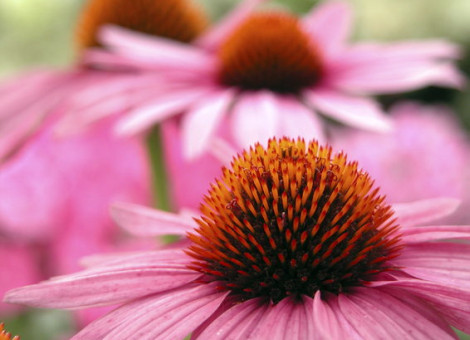
Echinacea Revelations

Echinacea is widely known as an immune boosting herb that is used at the onset of cold and influenza infections. But, if you’re only using it when your nose starts to “run” and throat gets scratchy, you’re missing out. According to a new publication in the Journal of Biomedicine and Biotechnology, in addition to Echinacea’s immune-modulating activity, this traditional Native American treasure also possesses antioxidant and antimicrobial properties which may address conditions ranging from fungal and parasitic infections to poor wound healing.


A current study in the journal Evidence-Based Complementary and Alternative Medicine indicates that Echinacea is, in fact, useful in protecting against upper respiratory infections. In the trial, 175 adult travelers were asked to take an Echinacea root extract (standardized to 4.4 mg alkylamides/day) or a placebo for up to 9 weeks. The study participants were given the respective treatments beginning two-weeks prior to travel and continuing until the end of their flight exposure. They were then surveyed before, immediately after and 4 weeks after their airplane travel. Those receiving the Echinacea extract demonstrated “lower respiratory symptom scores” than the placebo group. The specific findings reveal that, the Echicacea users were approximately 50% less likely to experience severe respiratory symptoms that would necessitate medical treatment. The authors of this double blind, randomized trial concluded that, “Supplementation with standardized Echinacea tablets, if taken before and during travel, may have preventive effects against the development of respiratory symptoms during travel involving long-haul flights”.

Colds and flus aside, the next chapter in the book of echinacea may well focus on a decidedly unexpected bodily organ: the skin. Scientists are particularly interested in the potential of Echinacea for: a) controlling the growth of bacteria associated with acne; b) protecting against nerve damage induced by excessive sun exposure; c) use as an adjunct to the conventional treatment of viral warts. In practical terms, this may mean that you’ll see more products on the market that include Echinacea in creams, lotions and oral supplements directed at consumers with viral conditions such as cutaneous warts.

To learn more about the studies referenced in today’s column, please click on the following links:

Study 1 – Applications of the Phytomedicine Echinacea Purpurea (link)

Study 2 - Randomized, Double Blind, Placebo-Controlled Trial of Echinacea (link)

Study 3 - The Potential Use of Echinacea in Acne: Control of Propionibacterium (link)

Study 4 - Neuroprotective Effects of a New Skin Care Formulation Following (link)

Study 5 - Oral Supplementation with a Nutraceutical Containing Echinacea (link)


Standardized Echinacea Extract May Reduce Travel-Related Illness

Source: Evid Based Complement Alternat Med. 2012;2012:417267. (link)

Wednesday, June 19, 2013

Herbal Rhodiola Extract Found to Increase Lifespan

Rhodiola rosea is now, according to recent research, becoming more widely accepted in the U.S. as a powerful anti-aging, anti-stress formula. In today's culture with stress coming from every direction, this comes as good news and a possible natural stress-relief treatment.

The herbal extract of a yellow-flowered mountain plant indigenous to the Arctic regions of Europe and Asia increased the lifespan of fruit fly populations, according to a University of California, Irvine study.

Flies that ate a diet rich with Rhodiola rosea, an herbal supplement long used for its purported stress-relief effects, lived an average of 10 percent longer than fly groups that didn't eat the herb. Study results appear in the online education news release from the University of California, Irvine

"Although this study does not present clinical evidence that Rhodiola can extend human life, the finding that it does extend the lifespan of a model organism, combined with its known health benefits in humans, make this herb a promising candidate for further anti-aging research," said Mahtab Jafari, a professor of pharmaceutical sciences and study leader. "Our results reveal that Rhodiola is worthy of continued study, and we are now investigating why this herb works to increase lifespan."

In their study, the UC Irvine researchers fed adult fruit fly populations diets supplemented at different dose levels with four herbs known for their anti-aging properties. The herbs were mixed into a yeast paste, which adult flies ate for the duration of their lives. Three of the herbs – known by their Chinese names as Lu Duo Wei, Bu Zhong Yi Qi Tang and San Zhi Pian – had no effect on fruit fly longevity, while Rhodiola was found to significantly reduce mortality. On average, Rhodiola increased survival for 3.5 days in males and 3.2 days in females.

Rhodiola rosea, also known as the golden root, grows in cold climates at high altitudes and has been used by Scandinavians and Russians for centuries for its anti-stress qualities. The herb is thought to have anti-oxidative properties and has been widely studied.

Soviet researchers have been studying Rhodiola since the 1940s on athletes and cosmonauts, finding that the herb boosts the body's response to stress. And earlier this year, a Nordic Journal of Psychiatry study on people with mild-to-moderate depression showed that patients taking a Rhodiola extract called SHR-5 reported fewer symptoms of depression than did those who took a placebo.

Jafari said she is evaluating the molecular mechanism of Rhodiola by measuring its impact on energy metabolism, oxidative stress and anti-oxidant defenses in fruit flies. She is also beginning studies in mice and in mouse and human cell cultures. These latter studies should help understand the benefits of Rhodiola seen in human trials.

Past Herbal Uses of Rhodiola Rosea as a Treatment for Depression by Herbalist

Rhodiola rosea is classified as an adaptogen herb, which means it increase the body's ability to cope with internal and external stress factors, and normalize the functions of the organism. Adaptogen herbs help maintain the stable internal environment inside the organism known as homeostasis.

Russia has used Rhodiola rosea for years to enhance mental and physical performance. It has been widely used by Russian athletes and cosmonauts to increase energy. In addition, Russian medicine has also traditionally given Rhodiola rosea to its soldiers, sportsmen and aging political leaders as an effective anti-aging medicine. Rhodiola rosea helped them to improve cognitive functions and physical performance.

Rhodiola rosea also has extraordinary pharmacological properties as an anti-depressive agent. The anti-depressive and anti-stress activity of Rhodiola rosea is higher than that of St. John's Wort, Ginkgo biloba and Panax Ginseng.

In another clinical trial, 150 individuals suffering from depression took Rhodiola rosea extracts for a period of one month. At the end of that period, two-thirds of them had full remission of clinical manifestations of depression, and had become more active and more sociable. Daytime weakness and general weakness disappeared.

Rhodiola rosea has also been recommended for fatigue, catarrhal seasonal diseases, along with mental performance and to improve endurance. It increases bodily resistance to physical and mental overloads, and negative environmental effects.

Rhodiola is cardio-protective, normalizing the heart rate immediately after intense exercise. It improves the nervous system and mental functions such as memory, by increasing blood-supply to the muscles and brain, and it also increases protein synthesis.

Russian research has emphasized that Rhodiola rosea extracts have rejuvenative properties due to their ability to raise the efficiency of the intra-cell DNA repair mechanisms.

Sources:

University of California - Irvine
(http://today.uci.edu/news/release_detail.asp?key=1701)
Jeffrey Felgner, Irvin Bussel, Anthony Hutchili, Behnood Khodayari, Michael Rose and Laurence Mueller of UC Irvine participated in the study. Sun Ten Inc. provided the herbs.

RHODIOLA ROSEA (Russian Rhodiola, Golden root)
Anti-Aging Medicine of 21st Century
(http://www.anti-aging-guide.com/RhodiolaRosea.html)

Most Recommended Rhodiola Products:

Life Extension, Rhodiola Extract, 250 mg, 60 Veggie Caps

Planetary Herbals, Rhodiola Rosea Extract, Full Spectrum, 327 mg, 60 Tablets